
Shortly after Matt Haimovitz took a teaching position at the University of Minnesota, the Twin Cities was the target of the ICE surge. He teamed up with his U of M colleagues and students to meet the moment musically.
On a new recording entitled Neighbors, Haimovitz pays tribute to the people of Minneapolis and Saint Paul who bravely endured the ICE occupation. Haimovitz visited YourClassical MPR to talk to host Tom Crann about the recording. Listen to the interview and the music in the audio player above, and find a transcript below.

Interview Transcript
Tom Crann: Cellist Matt Haimovitz, my guest, live in studio. We're going to talk about his new recording. It is called "Neighbors." We're going to sample it, too. Coming up.
music:
Luna Pearl Woolf: Neighbors: A Prayer
University of Minnesota Chamber Singers
Matthew Mehaffey, conductor
Stephanie Arado, violin
Matthew Haimovitz, cello

Tom Crann: It's called "Neighbors: A Prayer," and it was Matt Haimovitz playing solo cello and the University of Minnesota Chorale, Matthew Mehaffey, and it is music by Luna Pearl Woolf, but it's based on music by Bloch. As I say that, I'm going to ask Matt Haimovitz himself, who's here with me, to confirm all of that from the recording, "Neighbors." Correct?
Matt Haimovitz: That is correct. I'm going to add that my colleague Stephanie Arado is the violin soloist, beautifully played there, and she joins me. So it's that duet, plus the piano is transformed into the choir.

Tom Crann: Yeah. So originally a solo cello with piano piece?
Matt Haimovitz: It is. And Luna and her librettist David Van Taylor had — well, I asked, "Could we turn this into a piece that deals with what we just went through over the last year?" Because we've gone through some stuff here! And David had the brilliant idea to take words of activists, Minneapolis activists, and turn it into the text, into the libretto of this piece. So they took that piano part, made it into a choral part, added the words, and so what you heard there: "be brave," "no one will save us but us," the ending, and all of that comes from actual ... from our neighbors, from our people here, here in the Twin Cities.
Tom Crann: Matt Haimovitz, cellist, professor at the University of Minnesota, with me, has just finished his first academic year, still, in effect, getting settled with your life here in Minnesota. And we talked when you were here with Stephanie Arado and in the studio in Bakken, and you said this was some way to begin your tenure here in Minnesota. But I'm wondering, was there a moment during the ICE surge and the events where you said, "We have to mark this. We have to remember this in music"?
Matt Haimovitz: Well, first of all, I'm very excited to be here and to have moved to the Twin Cities. I didn't get the memo that we were going to be, you know, occupied by our own government and under attack. Yeah, I had no idea. None of us really did. I mean, we knew it was tough times, but we didn't know it would get that bad. So, you know, my first reaction in general when I — you know I'm thinking of like 9/11, you know, the moments after that. This is up there with traumatic events that disrupt daily life, and really, when you do something as, I don't know, esoteric or abstract as what I do, you know ...
Tom Crann: As a musician.
Matt Haimovitz: As a musician. Put sounds out there and and share emotion, basically, with people and connect with people. My first reaction is to freeze because, like, what role do you have in this? We can't do anything. We can't stand up to tyranny in that way, but then, you know, just seeing the people out on the streets and on bridges and at the monuments and the — just everywhere. Seeing parents protecting schools. Seeing immediately, you know, every window with "ICE out" banners. Fearless. It was extraordinary. And that gave me the energy and the courage to to start thinking about OK, what can we do artistically, musically, because we're going to need to heal, and we're going to need to — you know, oftentimes, in dealing, I mean, I think that's the power of music, first of all, it can bring us all together around a common sort of emotion. But also, I think it can heal, and it can wrestle with issues and ideas that are very complex and difficult for us to confront simply with words and concepts. So I think one thing led to another.
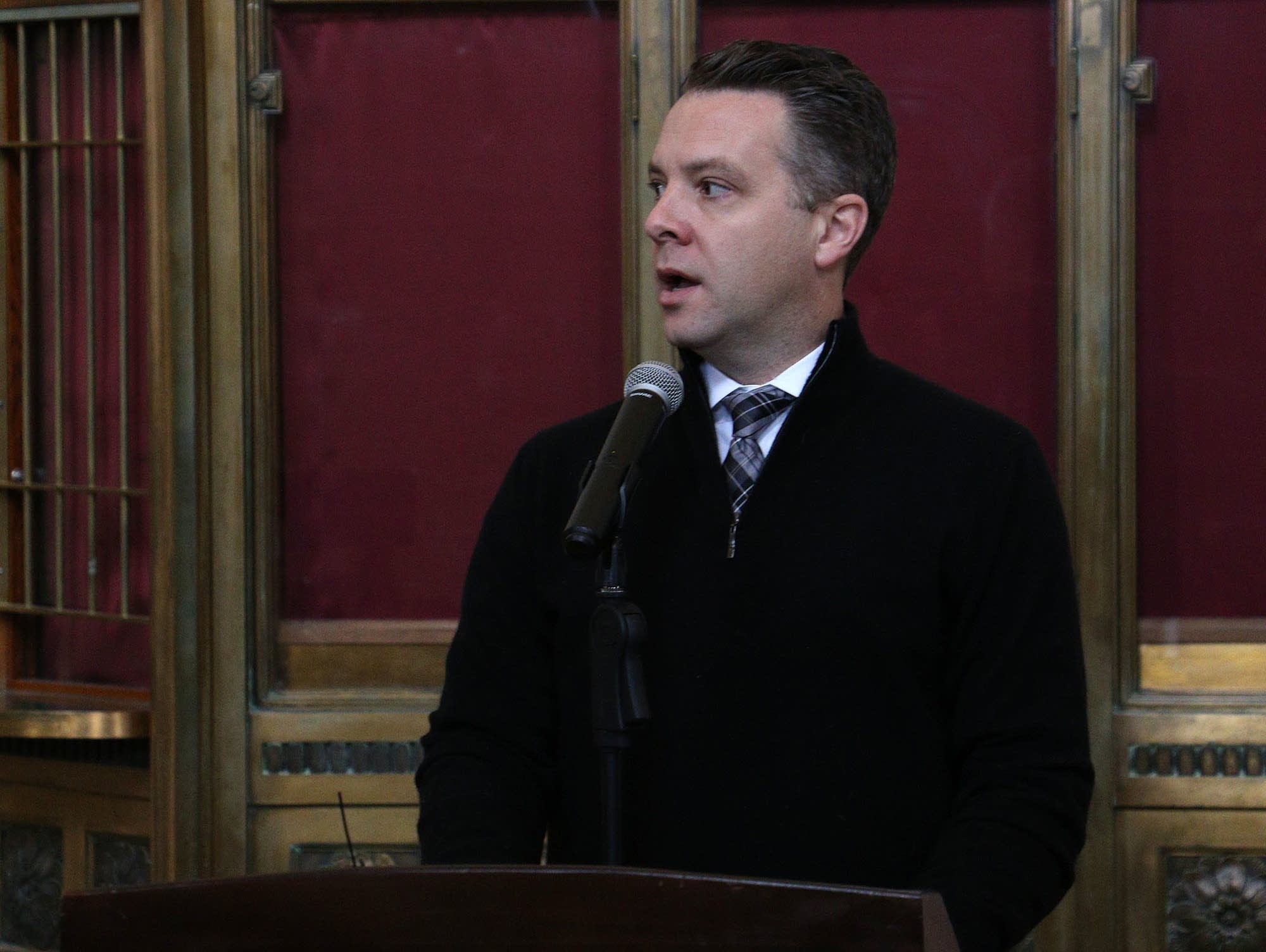
Matthew Mehaffey, my colleague, Director of Choral Studies at the University of Minnesota, contacted me. A Minnesota composer, David Dickau, had written a piece for violin, cello, and choir, and directly dealt with the current circumstances, and Matthew asked if I was interested. I was immediately. I didn't hesitate. Of course. And so that collaboration happened. And then we started talking about, "Well, we should record that piece." And then I had the idea, well, maybe we should, for the same forces, we should have another one. I've always thought about the Bloch prayer as as needing words and needing a congregation. I thought it was natural to have a chorus instead of a piano. And so I asked Luna and David to address that, and so we got that piece. And then I was just really also very inspired by all the students at the university who just went on with their lives. They were completely committed and dedicated. I gave them the option to move online because we were in lockdown, you know, for weeks, actually, and had to lock the building, and so I gave them the option if they didn't feel safe, because I do have international students, and I was thinking, you know, just crazy thoughts; you know, "What am I going to do if ICE enters the building? Do I take take my Chinese students into my studio and stand guard outside my studio?" Like, "What are we supposed to do?" So, I just thought it would be very bonding for all of us to have this kind of teacher-student relationship with them, and you know, when you start making music with people, regardless of age or background, you level the playing field and it bonds you. And so I thought let's take the Julius Klengel Hymnus, which is a wordless hymn, and do play together and make music together.
Tom Crann: That's what we'll hear next. This is Matt Haimovitz and his cello studio students at the U. "Uccellos," you call them. Uccellos?
Matt Haimovitz: You know, I've had a cello ensemble for years called Uccello.
Tom Crann: Uccello. Yeah.
Matt Haimovitz: I love the painter [Paolo Uccello (1397 – 1475)]. One of the first perspective painters in Renaissance painting, and also it means "bird," of course, in Italian, and it's got "cello" in it, of course.

Tom Crann: Of course. Yeah.
Matt Haimovitz: So yeah, so I thought that was a good name. I've had it for years and years, and in 2010, the ensemble was nominated for Grammy, and I mean, you know, we've done really fun, interesting projects, and this is the next step. I brought it here to the university and to the Twin Cities.
Tom Crann: A hymn, Hymnus for 12 cellos, Julius Klengel's music. It's from Matt Haimovitz's recording, new recording called "Neighbors." He's our guest here on YourClassical MPR this afternoon.
music:
Julius Klengel: Hymnus for 12 Cellos
UCCELLO
Matt Haimovitz, cello
Tom Crann: The sound, and a gorgeous sound it is, of 12 cellos playing music by Julius Klengel, a hymn, Hymnus for 12 cellos. Matt Haimovitz and Uccello. And those are cellos from your studio at the University of Minnesota for that recording?
Matt Haimovitz: They're all students from here, from the university. And maybe a shout-out to Franklin Watkins, who is, he was studying at the university through the PSEO program, and so he's still in high school and just about to start—
Tom Crann: Oh wow!
Matt Haimovitz: ... at New England Conservatory, his studies, but he was studying here, and he, that first solo that you might have noticed, that's Franklin. But all of them sound so great, and yeah, if you check out the liner notes, all their names are on there and credited and everything. But just really, I didn't expect in the first year that we could put something like this together. But they worked so hard this year, and considering everything else going on, it's really quite a remarkable achievement, and I'm very proud.

Tom Crann: Matt Haimovitz talking about the recording, "Neighbors," that has come out as a reaction to, and more than a reaction to, actually a tribute to, as you say in the notes, the neighbors in Minneapolis and Saint Paul during the ICE surge, and it's an example of art and music meeting the moment. And I use that term "meeting the moment," but I wondered as you put this together, was there an eye toward sort of going beyond that and commemorating something as well for the future?
Matt Haimovitz: I think, as I was watching everything unfold, and being a new member of the community here, first of all, I think the whole country, the whole world, really, saw it as a blueprint for how one, in a dignified manner, stands up for values, for our values, and for our community. And so I think first and foremost, it's thanks all of this community for taking — I mean, they risked their lives to do this, and it was really exceptional and beautiful to see and drive around and participate.
Tom Crann: And in two cases, lost their lives
Matt Haimovitz: It's unfathomable, really unfathomable. Our own citizens, that our government would do this to our own people. It's heartbreaking. And so, first and foremost, it's commemorating that loss, mourning that loss, and being thankful for this, for all these neighbors. My new neighbors. That was the first impetus for all of this. And then, yeah, I mean now we have our own two cents, our own document that it led ... You know, oftentimes, unfortunately, tragedy and this kind of tyranny and these kinds of circumstances, they do inspire art, oftentimes great art, and sometimes that art is also under attack, which I would argue is the case now as well, if you look at arts institutions being taken over and that type of thing. But yeah, so I think, in that sense, it's what I can do. I want to be a productive citizen, too. So it's what I can do for the community. And I've never, I have to say, I don't think I've ever turned anything around so fast. That, I was inspired by Bruce Springsteen. If he could do it, I just kept thinking, "If he could do it, I'm sure we could do it."
Tom Crann: I was going to ask you as we were walking upstairs here to go on the air, this came together very quickly, didn't it?
Matt Haimovitz: Very quickly. We recorded on May 5.
Tom Crann: OK.
Matt Haimovitz: At Ted Mann. We had one of the one of the most decorated producers, he was remotely producing from New York City, David Frost.
Tom Crann: Oh yeah, he's a big name. Goes way back, yeah.
Matt Haimovitz: Yeah, I adore David, and many of my last projects for the last whatever, 10, 15 years, have been with David. I even recorded with his dad, actually, Tom Frost, who used to produce Vladimir Horowitz and other other legends. But David is just exceptional. So he was producing us. We had a couple of sound engineers. And it was really difficult because we only had a few hours at Ted Mann, and it's a busy place, and the choir was made of students, so they had to go to class, and then my students had to go to class. So we had to sort of fit three tracks in, I think, we had four hours.
Tom Crann: Yeah.
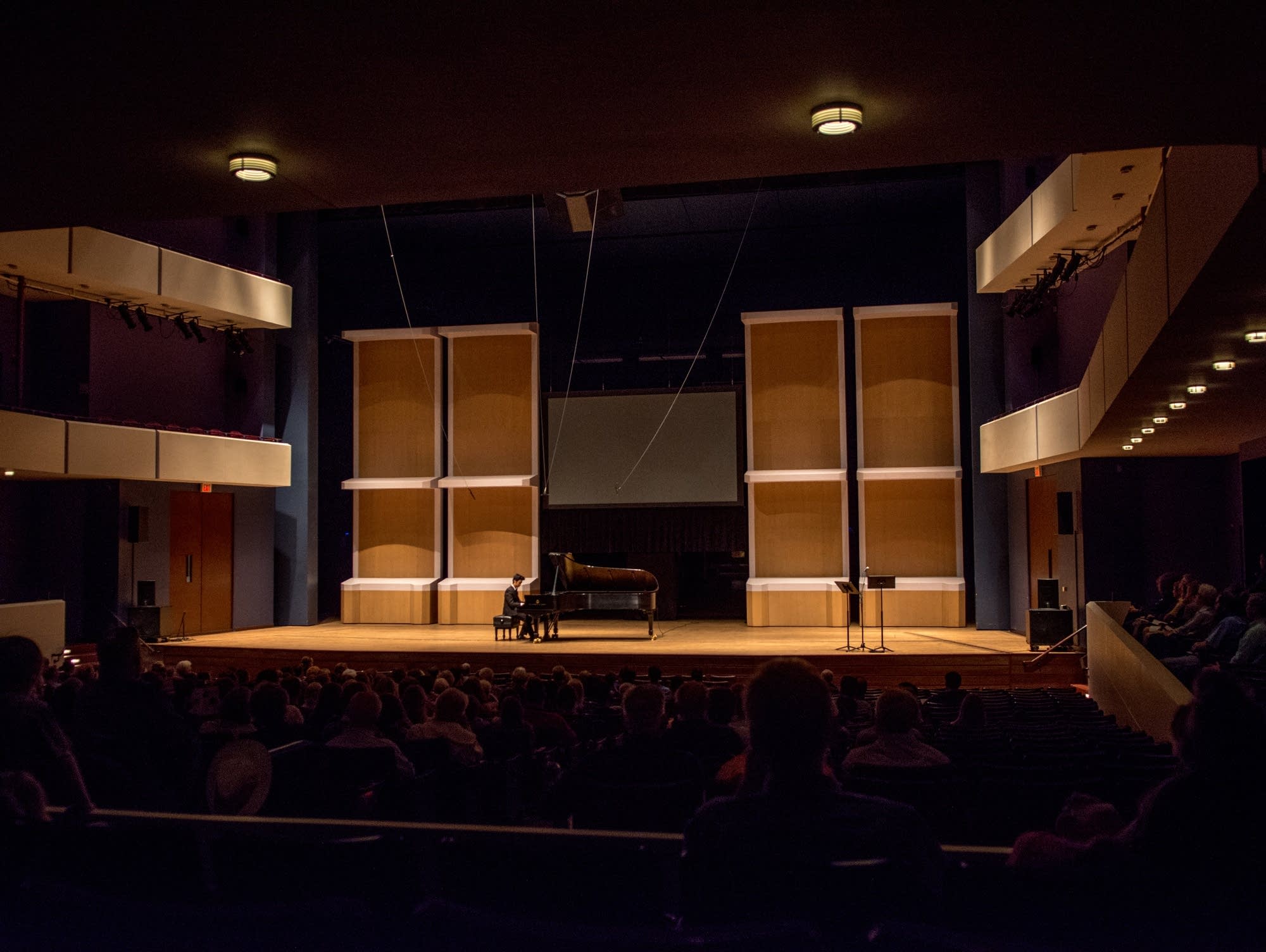
Matt Haimovitz: And that's not a lot of time, and we we had never really worked. We did some rehearsing on the "Neighbors" track, the Bloch, and we performed the David Dickau twice, actually, on campus.
Tom Crann: OK.
Matt Haimovitz: And then we've been rehearsing the the Hymnus, the Klengel. But we had to spend quite a bit of time on the Bloch; that was complex, getting the sound and everything. And then we had very little time for David Dickau's piece, "I Am Spirit," but because we had performed it, the choir just — really, it was just a miracle. I mean, just one take. And they were all there, and so that's almost a live performance. The "I Am Spirit," which actually is in the spirit of the music itself, so I didn't think we were going to be able to to release it, but then when I heard it, I thought, "Oh my gosh, this has something. Let's put it out there." And it's such a human project that it fits right in there.

Tom Crann: Matt Haimovitz, I want to thank you for coming in and sharing this music with us today. It's always a pleasure talking to you.
Matt Haimovitz: Tom, I have to tell you that to hear this music played in the Twin Cities and through Minnesota, it is so moving to me. We've been kind of focused on the art and and getting it all done, putting it all together, and to know that our community is is listening and that this music has has reach is really meaningful to me, and so it's great to be with you today.
Tom Crann: Well, always a pleasure. Cellist Matt Haimovitz from the University of Minnesota these days, settling into life in the Twin Cities and meeting the moment with his new recording. The new recording is called "Neighbors," and the the last — there are three tracks on it. We're going to hear David Dickau's music, it's called "I Am Spirit," to kind of finish this project off. And I wish you all the best. Matt. I notice you're listening as intently as you were at the recording session, with the headphones in the studio there. I didn't want to interrupt you.
Matt Haimovitz: You know, I never get to listen to my own recordings. I never do. So this is kind of a nice chance to actually hear it, and also with a different context.
Tom Crann: Yeah, yeah. All right.
music:
David Dickau: I Am Spirit
University of Minnesota Chamber Singers
Matthew Mehaffey, conductor
Stephanie Arado, violin
Matt Haimovitz, cello
Tom Crann: David Dickau's music is called "I Am Spirit," and it was sung there by the University of Minnesota Chamber Singers. Matthew Mehaffey directs them, along with violinist Stephanie Arado and cellist Matt Haimovitz. Matt Haimovitz's new recording project is called Neighbors, and you can download it wherever you get or stream music. It's also on the website of Pentatone. You can find out more about the recording, a recording that meets the moment, historic moment here in the Twin Cities, a musical reflection on community, resistance and collective voice. You've been hearing it here on YourClassical Minnesota Public Radio, with our thanks to Matt Haimovitz.

This activity is made possible in part by the Minnesota Legacy Amendment‘s Arts & Cultural Heritage Fund.
Love the music?
Show your support by making a gift to YourClassical.
Each day, we’re here for you with thoughtful streams that set the tone for your day – not to mention the stories and programs that inspire you to new discovery and help you explore the music you love.
YourClassical is available for free, because we are listener-supported public media. Take a moment to make your gift today.