Poster Class Notes Artist Border CrosSing Washburn Bloomington
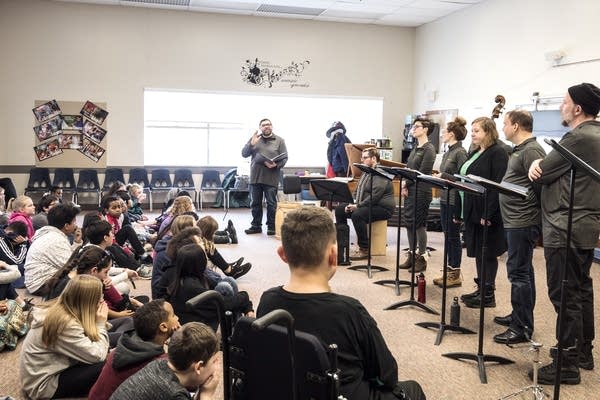
Border CrosSing performs at a school.
Courtney Perry/MPR

Meet Class Notes Artist: Border CrosSing

Class Notes Artists: Border CrosSing

Listen to Ahmed Anzaldúa, Artistic Director of Border CrosSing, chat with Classical MPR host Julie Amacher, and check out photos from their time in the music class at Washburn Elementary in Bloomington.
BC
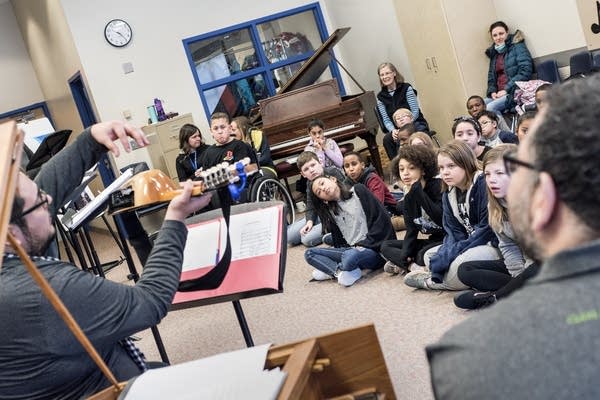
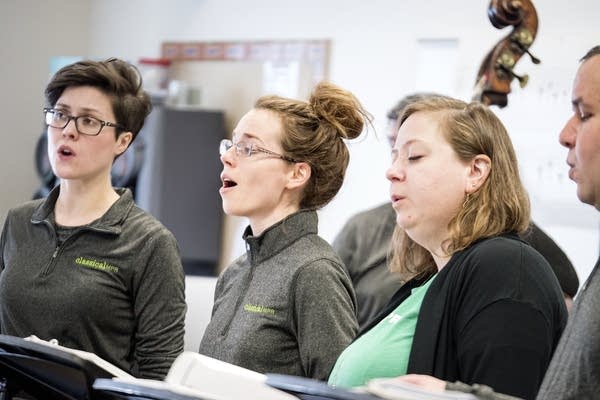
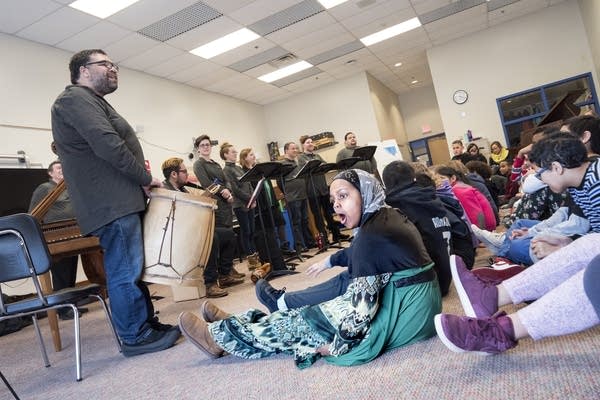
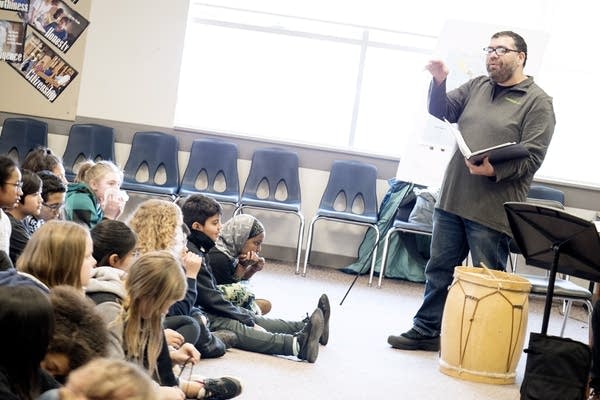
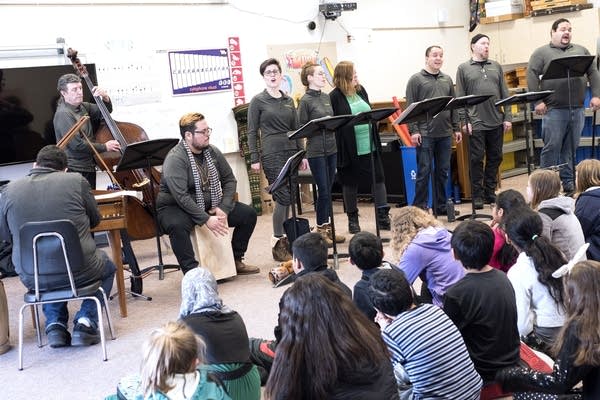
Class Notes Artist Border CrosSing went to Washburn Elementary in Bloomington. They played in the music classroom for third-, fourth and fifth-grade students. (Courtney Perry)
BC
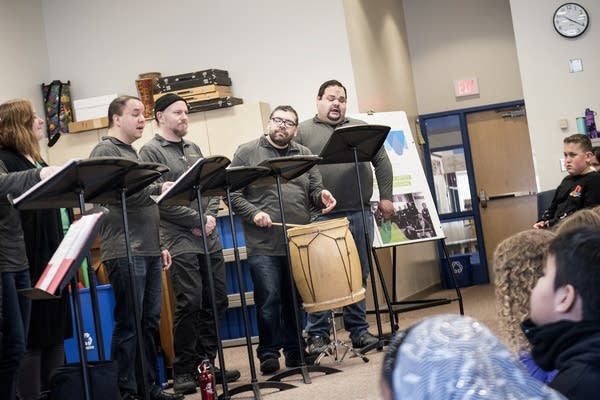
L-R: Ahmed Anzaldúa at the harpsichord, Rahn Yanes playing double bass, Nico Muñoz playing cajon, Gabrielle Doran, Bethany Battafarano, Alyssa Anderson, Shahzore Shah, Jake Endres, Justin Staebell. "Tleycan Timochoquilia" is a song by Gaspar Fernandes, a Portuguese Baroque-era composer who emigrated to Mexico. The lyrics are in Nahuatl, an indigenous language and people from southern Mexico. It is the second-most spoken language in Mexico after Spanish. The song is about trying to cheer someone up. (Courtney Perry)
BC
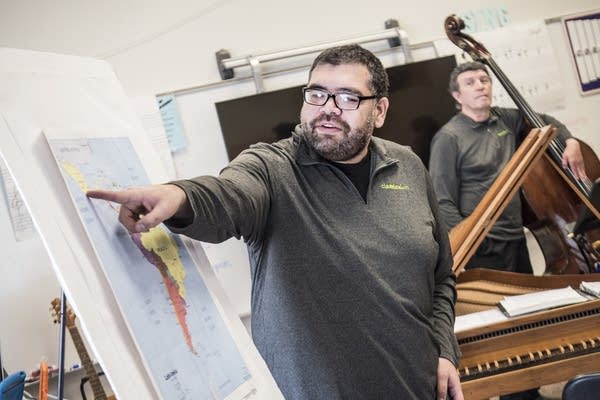
Ahmed Anzaldúa is the Egyptian-Mexican Artistic Director of Border CrosSing. He devised a program of music from Latin America featuring songs spanning four centuries and three languages. Countries featured include Mexico, Peru, Venezuela and Cuba, so he brought a map to show the students were those countries are. Pictured in the background is bassist Rahn Yanes. (Courtney Perry)
BC
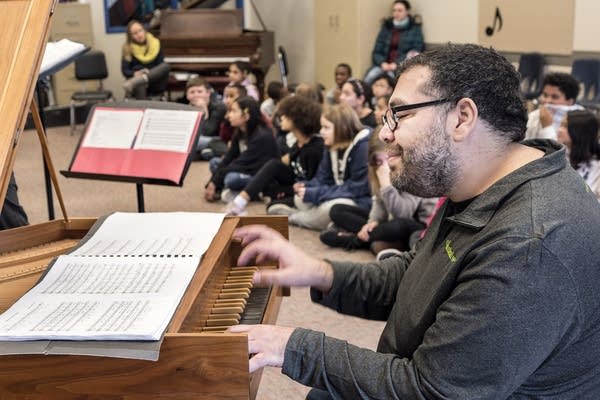
Anzaldúa brought his own harpsichord to perform the songs from the Baroque period. He switched to piano for the 20th-century songs.(Courtney Perry)
BC
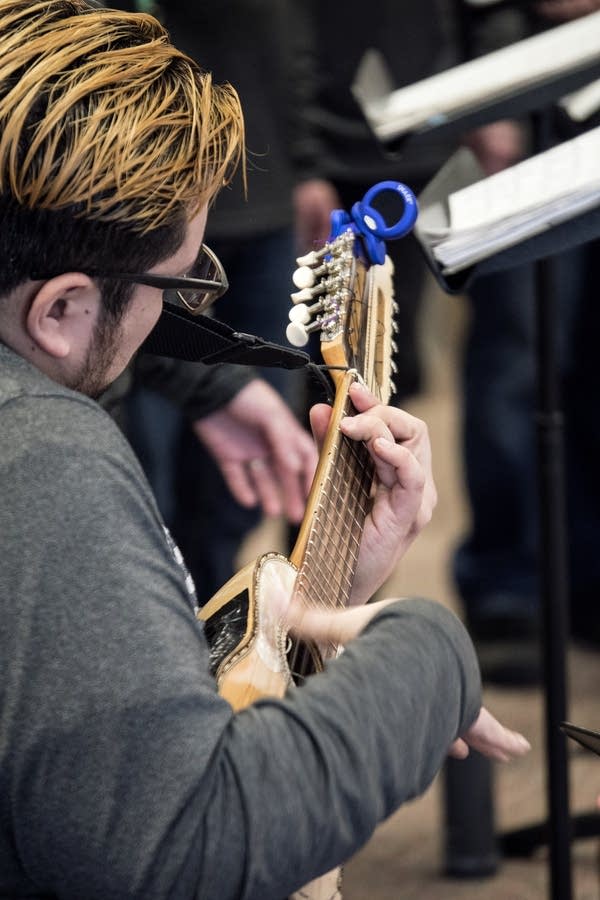
Chilean native Nico Muñoz is a multi-instrumentalist. Here he shows students the shape of the charango and how the body used to be made of armadillo shells until the animal became endangered. They used to use the entire body including the head, eyes and ears! (Google it.) Now, of course, charangos are made out of wood. (Courtney Perry)
BC
The Andean charango is similar to a mandolin, probably invented after Europeans brought string instruments to the area. It has doubled strings and can be very loud. It can be strummed, picked or tremeloed. (Courtney Perry)
BC
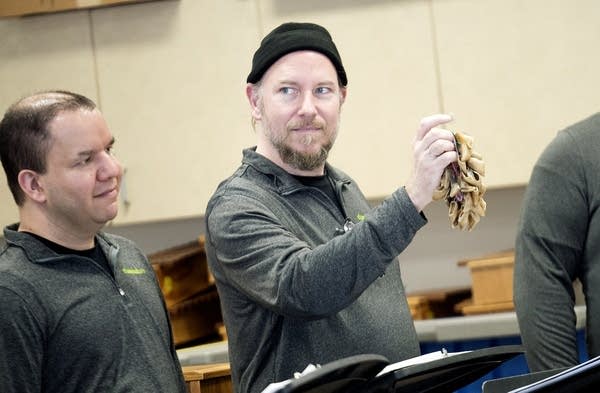
Baritone Jake Endres shakes goat hooves during the Nahuatl lullaby "Xicochi Conetzintle." The hooves make a gentle sound like a rattle to soothe a baby. "Xicochi" means "shh shh, calm down," and "conetzintle" means "little baby whom I love very much." (Courtney Perry)
BC
Sopranos Gabrielle Doran and Bethany Battafarano and mezzo Alyssa Anderson are the ladies of the Border CrosSing Class Notes roster. Battafarano sings a solo on "Cancion de Cuna Para Dormer a un Negrito," a Cuban lullaby with a habanera rhythm by Xavier Montsalvatge. With lyrics in Spanish, the poetry is by a Uruguyan poet. The background singers evoke a dreamy atmosphere as an enslaved Black mother sings her baby to sleep. (Courtney Perry)
BC
Anzaldúa shows off the bombo, a drum that is found in various places in South America. Its heads are made from animal hides, probably cow. It is still soft from the animal's skin and hair. (Courtney Perry)
BC
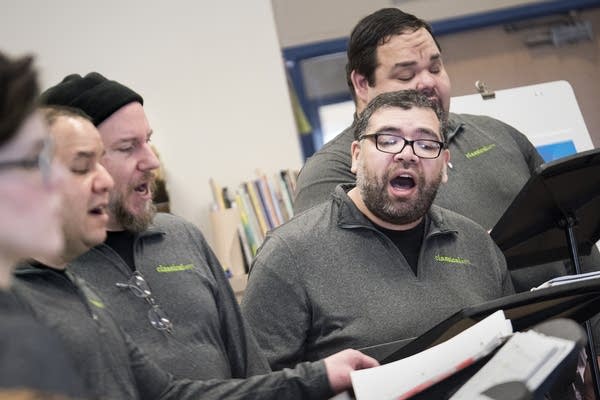
"Hanacpachap Cussicuinin" is an anonymous 17th-century hymn in Quechua, which is an indigenous language of Peru. The sounds "k," "p" and "ch" are prevalent in the Quechua language. This song is in a European choral style despite its indigenous lyrics and offbeat rhythms, being the first example of published choral polyphony in the New World. The lyrics pay tribute to the Virgin Mary. Anzaldúa keeps the beat on the bombo. (Courtney Perry)
BC
Shahzore Shah, Jake Endres, Ahmed Anzaldúa and Justin Staebell have a solo in "Hanacpachap." (Courtney Perry)
BC
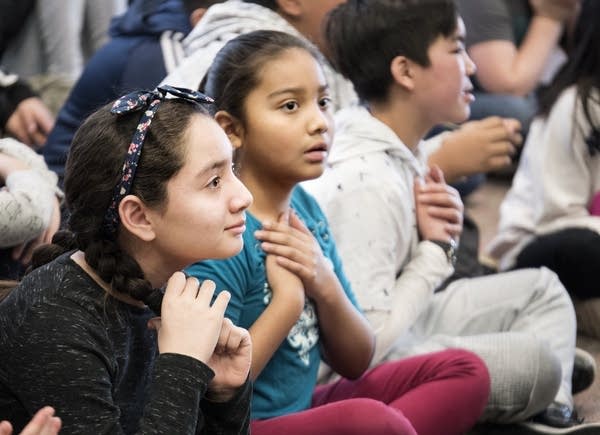
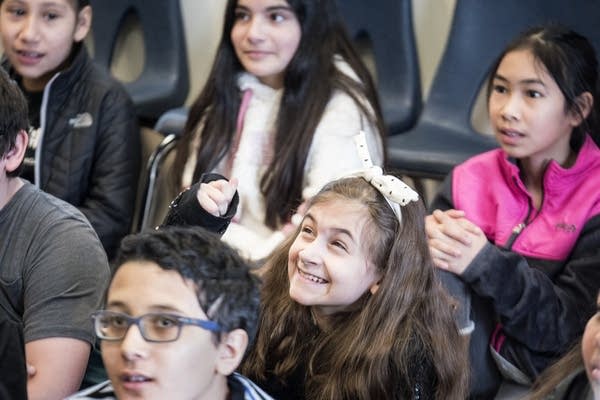
Anzaldúa asked students who spoke Spanish in each classroom and also asked if anyone had heard of particular styles of songs from Mexico like corridas or rancheras. There were several Hispanic students in all three classes, and they were excited to hear songs and musical styles that were familiar. One student even told Anzaldú;a that his father speaks Nahuatl. Border CrosSing also has performed at three Spanish immersion schools in the Twin Cities, where Anzaldúa did the entire speaking portion in Spanish. (Courtney Perry)
BC
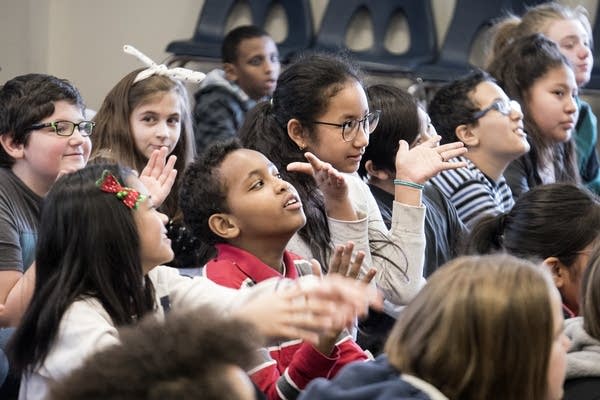
Students make the sign for "amo" ("I love") in a song from Venezuela called "Alma Llanera," about cowboys loving, crying, singing and dreaming about their cowboy land. (Courtney Perry)
BC
Kids make the sign for "canto" ("I sing"), gesturing with their hands as if they're singing out. (Courtney Perry)
BC
(Courtney Perry)

Love the music?

Donate by phone
1-800-562-8440

Show your support by making a gift to YourClassical.

Each day, we’re here for you with thoughtful streams that set the tone for your day – not to mention the stories and programs that inspire you to new discovery and help you explore the music you love.

YourClassical is available for free, because we are listener-supported public media. Take a moment to make your gift today.

More Ways to Give

Your Donation

$5/month
$10/month
$15/month
$20/month
$
YourClassical Radio
00:00
Infinity:NaN